References
Alliance for a Sustainable Future. (2025, January). Building community resilience: How local leaders are advancing resilience hubs and bolstering critical infrastructure [PDF]. Center for Climate and Energy Solutions. https://www.c2es.org/wp-content/uploads/2025/02/Alliance-2024-Building-Community-Resilience_Final_20250130-revised-web.pdf
Chandroth, A., Visentini, A. (2025, July). Electric Power Outages [Presentation]. Internal presentation.
Climate Central. (2022). Surging power outages and climate change [PDF]. Climate Central. https://assets.ctfassets.net/cxgxgstp8r5d/73igUswSfOhdo7DUDVLwK7/bb0a4e95e1d04457e56106355a1f74b9/2022PowerOutages.pdf
Indiana Government. (n.d.). IndianaMap Dashboard[ArcGIS Dashboard]. ArcGIS Online.https://ingov.maps.arcgis.com/apps/dashboards/1df887bd98a34d37aa69f96979ef21b5
Konisky, D. & Carley, S. (2020, June). Survey of household energy insecurity in Indiana in time of COVID [PDF]. Energy Justice Lab, Indiana University. https://energyjustice.indiana.edu/doc/indiana-wave-1-brief-report_a.pdf
National Centers for Environmental Information. (2025). U.S. billion-dollar weather and climate disasters: Indiana summary [Online dashboard]. National Oceanic and Atmospheric Administration. https://www.ncei.noaa.gov/access/billions/state-summary/IN
Nouri, N., Devineni, N., Were, V., & Khanbilvardi, R. (2021). Explaining the trends and variability in the United States tornado records using climate teleconnections and shifts in observational practices. Scientific Reports, 11, Article 1741. https://doi.org/10.1038/s41598-021-81143-5
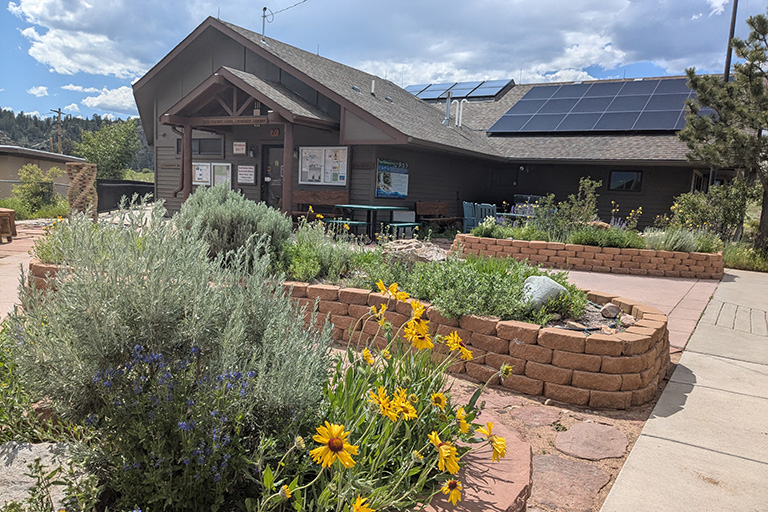
Poudre Valley REA. (2021, October). Microgrid Brings Increased Resiliency For Red Feathers Lakes. PVREA. https://pvrea.coop/the-co-op/news/microgrid-brings-increased-resiliency-red-feather-lakes/
Ross, L., Drehobl, A., & Stickles, B. (2018, July). The high cost of energy in rural America: Household energy burdens and opportunities for energy efficiency. American Council for an Energy-Efficient Economy. https://www.aceee.org/research-report/u1806
Widhalm, M., Hamlet, A. Byun, K., Robeson, S., Baldwin, M., Staten, P., Chiu, C., Coleman, J., Hall, E., Hoogewind, K., Huber, M., Kieu, C., Yoo, J., & Dukes, J.S. (2018, March). Indiana’s past & future climate: A report from the Indiana climate change impacts assessment [PDF]. Purdue Climate Change Research Center, Purdue University. https://doi.org/10.5703/1288284316634