What will Midwestern aquatic invasions look like in a changing climate?

Preparing for aquatic invasive species

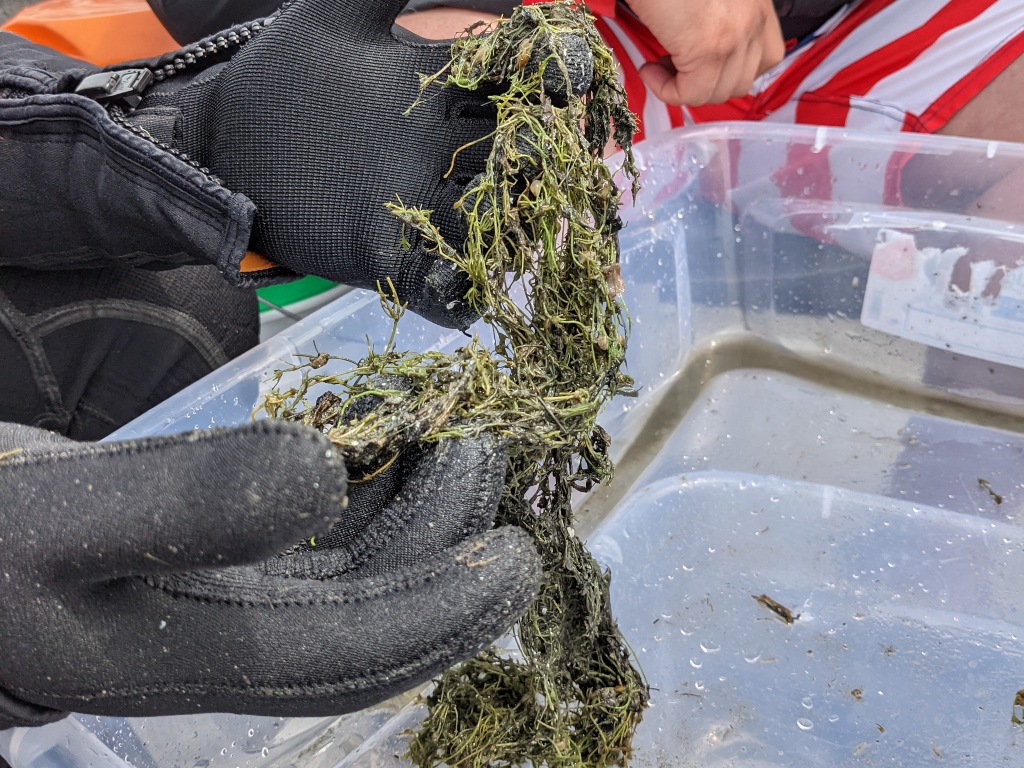
A mat of starry stonewort. Image courtesy of Andrea Webster.

The Problem

Starry stonewort, an invasive green alga, is relatively new to the Midwest and is currently expanding across the region, choking out native aquatic plants and disrupting ecosystems. Left unchecked, starry stonewort can grow tall and dense enough to inhibit water recreation and lower freshwater biodiversity. Due to the effort it takes to manage starry stonewort, understanding the factors that affect its rate of invasion is crucial to combating it.

The Project

To better understand how starry stonewort interacts with native species and predict how climate change will affect its spread, an ERI research team is monitoring nine lakes across Minnesota, Wisconsin, and Indiana. As the climate changes, northern lakes are projected to have similar temperatures as their southern counterparts, providing a proxy for how the alga will respond to future climate change.

In each lake, the team catalogs and quantifies the species that are present along with the presence of starry stonewort. Initially, the team identified locations within lakes with clear transition zones between habitat dominated by native species and habitat dominated by starry stonewort. The researchers then returned to these locations to measure how far the transition line moves in subsequent samplings.

Across two years of sampling, researchers have seen year-to-year variability within Midwestern lakes, with some locations showing an increase in starry stonewort and others showing an increase in native species.

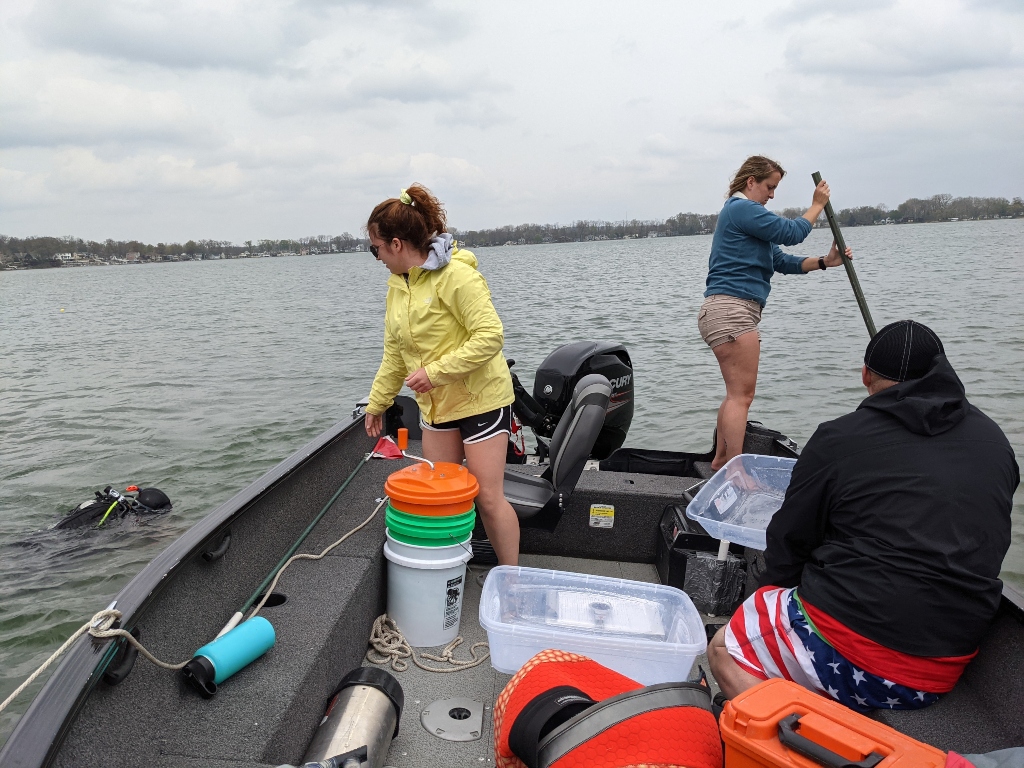
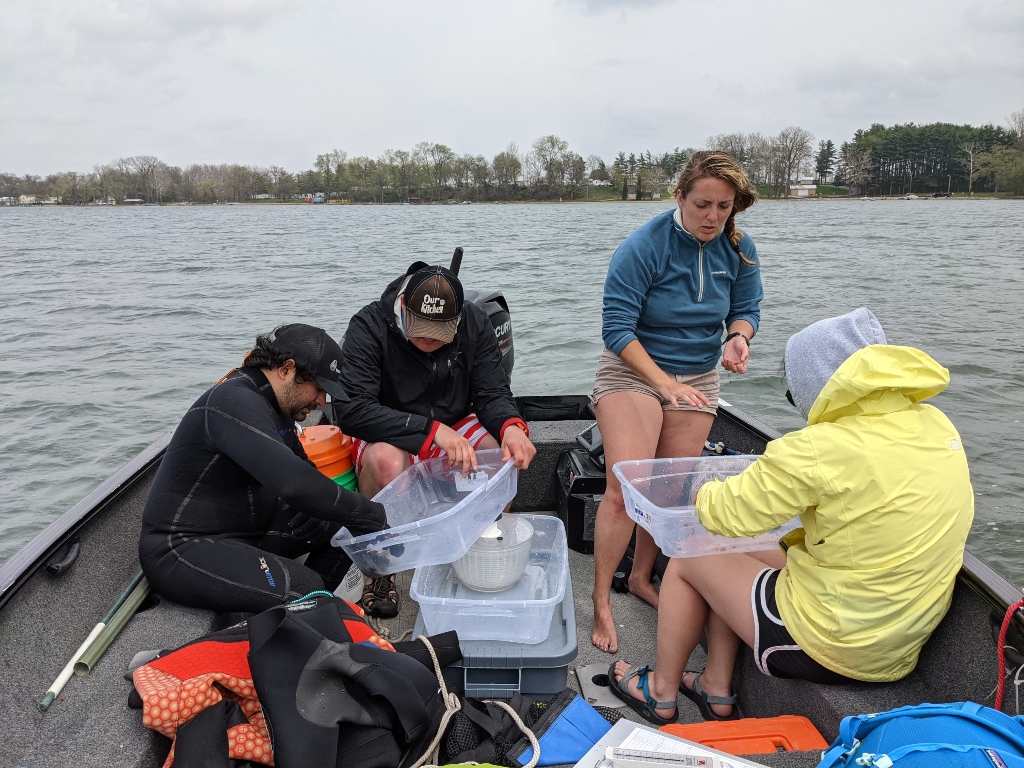
Members of the research team collecting and surveying starry stonewort. Image courtesy of Andrea Webster.
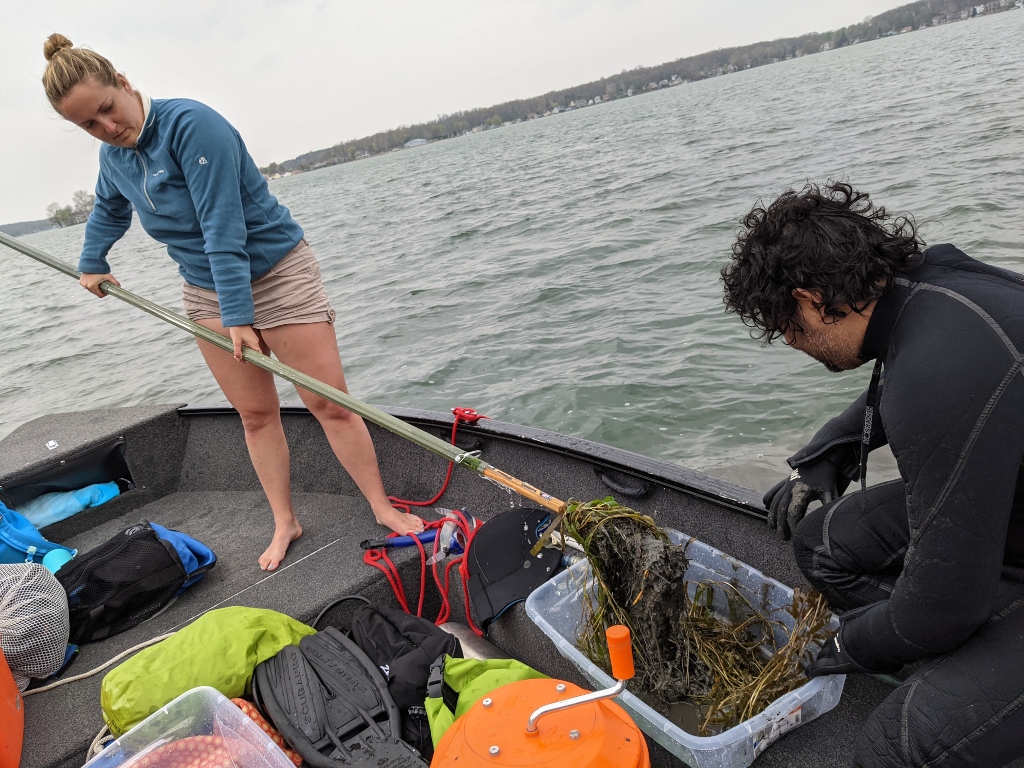
The research team collecting starry stonewort for measurement. Image courtesy of Andrea Webster.
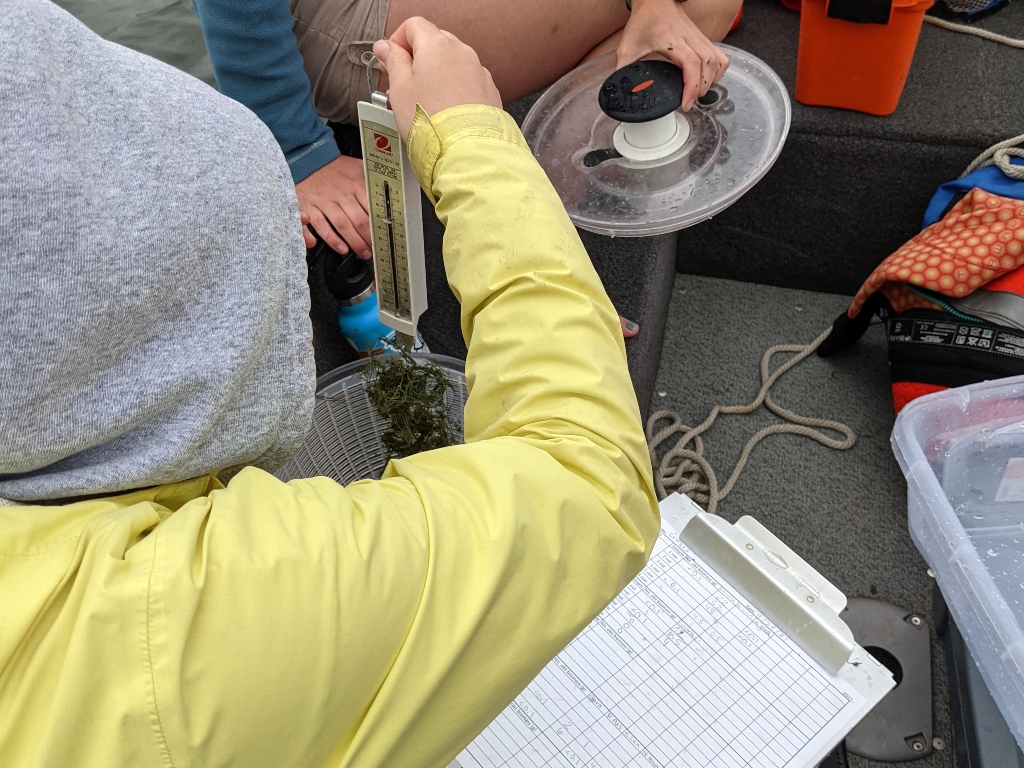
A researcher weighing a mat of starry stonewort. Image courtesy of Andrea Webster.
The research team checking their equipment.  Image courtesy of Andrea Webster.

The Path Forward

In 2021, the research team is conducting another round of sampling to better understand the factors that influence the spread of starry stonewort in some lakes and the resilience of native species in others.

Additionally, the team is examining the social side of aquatic invasions by interviewing the people who live on or manage the lakes being sampled. The researchers will be asking stakeholders about their awareness of starry stonewort, how they think about its consequences, whether it influences how they use the lake, and their thoughts on different management strategies. The survey will help inform lake managers as they contemplate how to address invasive species.

Updated June 1, 2021

Project Data

By conducting plant surveys and social surveys, the research team is collecting data on how starry stonewort spreads and what people think about managing invasive species.

The research team is looking at starry stonewort across temperature and latitude to see how it proliferates under different circumstances. They are also getting information from stakeholders on how they view starry stonewort and the management options associated with it.

The starry stonewort sampling is happening in nine lakes across Minnesota, Wisconsin, and Indiana (three lakes from each state). In each lake, the researchers are placing markers to permanently identify five sets of 30-meter long transects that cross from a section that is 100 percent starry stonewort to 100 percent native species.  They then follow the transects and inventory the species every meter to see changes in the plant community in the transition zone and how far the alga moves each year.

The data includes how many species are present, which species are present, the meters starry stonewort is present, and starry stonewort biomass. Latitude and temperature are also included. 

The data will be in spreadsheets.

The data will be hosted on a public website once the research is completed. The team will also look into creating a model with the data so managers and researchers can look at different scenarios of starry stonewort invasion under different environmental conditions and management strategies.